Mt. Gretna’s Local Fireplace Shop: Trust the Pros at North Forge Home Heating Inc.
Fireplaces, Stoves, Inserts & More: Built for Comfort and Style
What do we offer those in Mount Gretna, Cornwall, Quentin, Colebrook, Lawn, and beyond?
- Wood Fireplaces & Inserts
- Gas Fireplaces & Inserts
- Electric Fireplaces & Inserts
- Heating Stoves
- Hearth Accessories
- Grills & BBQ Accessories
- Outdoor Fireplaces
And we don’t just sell quality products – we service what we sell, standing behind our products with every season. Rest assured, your system will always be performing at its best.
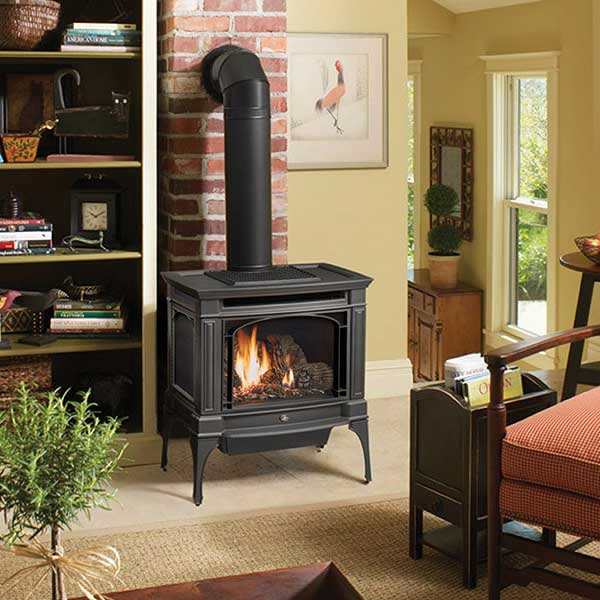
Wood Fireplaces vs. Gas Fireplaces: Which Is Better?
When deciding on a new fireplace, what fuel you choose will play a big part in your final ambiance and workload. While electric and pellet models are always options, most homeowners narrow their decision down to the two most popular choices: gas or wood.
When choosing between a wood-burning fireplace or a gas fireplace, you need to bring various factors into play – like convenience, cost, ambiance, maintenance, efficiency, and even environmental impact.
Ambiance & Experience – Winner: Wood
Wood fireplaces have a timeless appeal that’s hard to replicate – no matter how realistic new gas and electric models get. The crackling sounds, the aroma of burning wood, the dancing flames… It all creates a cozy, authentic experience that many homeowners feel is important.
Gas fireplaces, on the other hand, while convenient, often lack the rustic charm and true authenticity that a real wood fire provides. The sights, sounds, and scents of burning logs simply can’t be fully duplicated, no matter how advanced technology becomes.
Maintenance & Convenience – Winner: Gas
Wood fireplaces demand more upkeep, like sweepings to prevent creosote buildup, regular ash disposal, hauling and storing wood, and building/maintaining the fires. Wood fires also carry a higher risk of sparks escaping and causing damage, which can be a hassle.
Gas fireplaces are known for being easy to maintain, with fewer safety risks related to sparks or embers. They don’t produce ash or creosote, simplifying cleaning, and they ignite instantly at the flip of a switch, providing consistent heat without the need for chopping or storing wood.
Efficiency & Heat Output – Winner: Gas
From an efficiency standpoint, gas fireplaces generally outperform traditional wood fireplaces. Wood fireplaces often lose much of their heat through the chimney, sometimes making them only about 10-20% efficient. Gas fireplaces, particularly direct-vent models, can achieve efficiencies around 70-90%, making them a more cost-effective heating option.
Wood fireplace inserts and high-efficiency wood stoves can narrow this gap, but ultimately the more efficient option will always be gas with its steady, controllable heat output that’s ideal for supplemental heating.
Cost & Installation – Winner: Gas
Installing a wood fireplace can be more involved, often requiring a masonry chimney be built if you’re starting from scratch. In addition, wood fireplaces require regular ongoing costs for purchasing or sourcing firewood, as well as typically require more regular maintenance and repair services.
Gas fireplaces will need a gas line hookup and venting system, but won’t need bricks laid or a chimney built, making the installation costs much lower. After installation, operating costs can vary depending on local gas prices…but tend to be more predictable than fluctuating firewood costs.
Environmental Impact – It Depends
When it comes to your environmental footprints, it’s more about how you use the appliance – they each have their pros and cons. Burning wood releases particulate matter, carbon monoxide, and other pollutants, contributing to local air quality concerns. However, sustainably sourced wood is considered carbon-neutral since trees absorb CO2 as they grow.
Gas fireplaces burn natural gas or propane, producing fewer particulates and less smoke, making them cleaner-burning. Still, they rely on fossil fuels, which have environmental implications related to extraction and greenhouse gas emissions.
To sum up…
If you prioritize traditional ambiance, enjoy the hands-on experience of burning wood, and don’t mind the maintenance, a wood fireplace may be better for you. If you want hassle-free, efficient, and cleaner heating with easy controls, a gas fireplace is likely the better choice.
Both options have their merits – and with advances in technology, you can often find models that combine aesthetic appeal with efficiency in either category. Your final decision depends on your heating needs, budget, environmental values, and how much effort you want to invest in fireplace upkeep.
Need help making your decision? We’re happy to show you what models are best suited for your needs, preferences, and lifestyle. Reach out soon or stop by our showroom today.
What Is the Difference Between a Fireplace Insert & a Freestanding Stove?
This is one of the most common questions we hear from homeowners who are exploring their heating options for the first time. While both serve the same fundamental purpose (adding efficient, supplemental heat to your home) they differ significantly in terms of design, installation, and best-use scenarios.
- Fireplace Inserts: An insert is designed to be installed directly into an existing masonry or factory-built fireplace opening. If you have an old, inefficient wood-burning fireplace that loses more heat than it produces, an insert is often the ideal upgrade. It essentially transforms an underperforming fireplace into a high-efficiency heating appliance. Inserts are available in gas, wood, electric, and pellet options and are built to fit flush within the existing firebox, giving a clean, built-in appearance
- Freestanding Stoves: A freestanding stove stands independently on its own legs or base and can be placed in virtually any room, provided proper clearances and venting can be established. They’re a great solution when there’s no existing fireplace to work with, or when you want to add a heating source to a specific area of the home – such as a basement, addition, or great room. Freestanding stoves are also available across all fuel types and tend to have a more prominent, statement-making visual presence
Not sure which option fits your space? Our team can assess your home’s layout and walk you through the best path forward during a showroom visit or consultation.
Can a Fireplace or Stove Serve as a Primary Heat Source?
This is an excellent question, and the honest answer is: it depends. Many modern gas, wood, and pellet heating appliances are powerful enough to serve as the primary heat source for a specific zone or area of a home, and in some cases, for an entire smaller home. However, several factors come into play when determining whether a fireplace or stove can carry that responsibility.
- BTU Output: Every heating appliance is rated by BTUs (British Thermal Units), which measure heat output. Higher BTU units are capable of heating larger spaces. Our team can help you match the right BTU range to the square footage you’re looking to heat
- Home Insulation & Construction: A well-insulated, tightly sealed home retains heat far more effectively than an older or drafty one. The better your home’s envelope, the more efficiently any heating appliance will perform
- Open vs. Divided Floor Plans: Heat from a stove or fireplace naturally radiates outward from the unit’s location. Open floor plans allow that warmth to distribute more freely, while homes with many closed rooms may require multiple heating zones
- Fuel Type Considerations: Pellet stoves, in particular, are well-regarded for their ability to maintain consistent heat output over extended periods, making them a strong candidate for primary heating. High-efficiency gas fireplaces and inserts can also be excellent primary heat sources in the right setting
- Climate & Backup Systems: In Central Pennsylvania’s climate, having a backup heating source is always a wise consideration. Many homeowners use a wood stove or gas fireplace as their primary heat source during moderate cold and rely on their central system only during the harshest stretches of winter
During a consultation, our team can evaluate your space and help you realistically assess whether a specific unit can meet your primary heating needs.
How Long Do Fireplaces & Heating Appliances Typically Last?
A quality heating appliance is a long-term investment, and when properly maintained, most units deliver many years – often decades – of reliable performance. Here’s a general overview of what you can expect by product type:
- Gas Fireplaces & Inserts: With regular annual servicing and proper use, a quality gas fireplace or insert can last 15 to 25 years or more. Components like igniters, thermocouples, and blower motors may need replacement over time, but the core unit itself is built for long-term durability
- Wood-Burning Stoves & FireplacesL Cast iron and steel wood stoves are among the most durable heating appliances available. With proper care, many stoves last 20 to 30 years or beyond. Refractory panels, door gaskets, and glass may require periodic replacement, but the structural integrity of a quality stove holds up extremely well over time
- Pellet Stoves & Inserts: Pellet stoves involve more mechanical components than wood or gas units, including augers, motors, and control boards. A well-maintained pellet stove typically lasts 15 to 20 years, with some components requiring more frequent attention
- Electric FireplacesL The mechanical simplicity of electric fireplaces contributes to a reasonable lifespan of 10 to 20 years, depending on usage and the quality of the unit. LED flame components and blower motors are the most common items that may need attention over time
Factors that extend the life of any heating appliance include:
- Consistent annual maintenance by a certified technician
- Using the appropriate fuel type and quality for the unit
- Addressing minor repairs promptly before they escalate
- Operating the appliance within its designed parameters
Investing in a quality product from a reputable brand (and keeping up with regular service) is the most reliable formula for getting the maximum life out of your heating system.
Do Pellets Burn More Efficiently Than Wood?
Pellets are small, uniform cylinders made from compressed sawdust, wood chips, bark, and other wood waste products. Because they are manufactured under more controlled conditions, pellets have a consistent size, shape, density, and moisture content (usually below 10%). This uniformity makes pellets highly predictable in their burning characteristics.
But do they burn more efficiently than regular wood logs?
Yes – pellets generally burn more efficiently than traditional cordwood because:
- They have lower moisture content, which means they burn hotter, cleaner, and more productively.
- They have a higher energy density by volume, which means a smaller volume of pellets can produce as much heat as a larger volume of wood.
- They produce less creosote buildup in chimneys and flues, reducing the risk of chimney fires and cutting down on maintenance needs.
- They generate less ash and smoke than cordwood, making cleanup easier and improving indoor and outdoor air quality.
- They allow for more controlled combustion when used in pellet stoves or inserts, since these appliances regulate airflow and feed rates automatically.
- They make better use of waste materials, since they’re created from wood byproducts that might otherwise be discarded.
- They’re easier to store and handle, as they come in compact bags rather than bulky logs.
- They burn more consistently over time, without the fluctuations you can get from irregularly shaped or damp firewood.
Now, pellet fuel prices can fluctuate, but pellets do often cost more per unit of heat than firewood, especially if you source your own firewood (which would make it free). However, the higher efficiency and convenience of pellet systems often justify the expense for many homeowners.
Mount Gretna Fireplace Products: We’d Love To Serve You
Mount Gretna, PA isn’t a high-population town, but it does rank high when it comes to picturesque settings and historic architecture, making it a favorite destination for many.
One notable landmark is Gretna Theatre, which was established in 1927, and is one of the nation’s oldest summer stock theaters. You can also check out the Mt. Gretna Historical Society Museum – it delves into the town’s history.
Looking for a way to spend the day out and about? If the weather is nice, a visit to Mt. Gretna Lake & Beach is always a solid option. The area also has nice nature areas, like the nearby Conewago Recreation Trail. Or hit up the Mt. Gretna Art Show.
Is it raining outside? Consider a trip to the Mt. Gretna Roller Rink. Or simply stay indoors and curl up by the new fireplace, insert, or stove you purchased from us here at North Forge. Don’t have one yet? What are you waiting for? Reach out today. We serve Campbelltown, Lebanon, Manheim, Mount Joy, and more.
For Fireplaces, Inserts & More, Reach Out
Ready to enhance your home’s warmth and ambiance with the perfect fireplace, insert, or accessory? Our team is here to help you find exactly what you need and provide expert guidance every step of the way. Don’t wait—reach out today and discover the difference quality and service can make for your living space.
From Mt. Gretna to Hershey and everywhere in between, our service area covers a lot of ground.